

Kardynal Dental prioritizes preventative care to ensure our patients in Shelby Township, MI, maintain good oral health. However, when oral health issues arise, we offer comprehensive restorative care, including root canal treatments, to help restore and preserve your smile's function and aesthetics.
The root canals are the narrow, internal, canal-shaped chambers within a tooth's root system. The root canals are filled with dental pulp (nerves, connective tissues, and blood vessels). When a tooth's hard external structures (enamel and dentin) become compromised, the tooth's interior is exposed to bacteria, which can lead to an infection inside the tooth and its root canals.
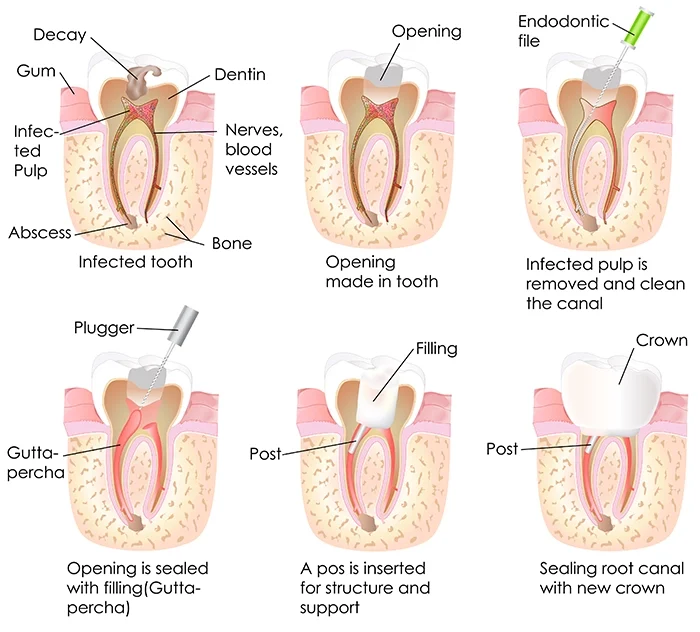
Root canal treatment is designed to eliminate the infection and diseased tissue from inside a tooth, reinforce the tooth's structure, and seal the inside of the tooth to protect it from future infection. In most cases, root canal treatment is the only option to avoid tooth extraction.
We offer root canal treatment (endodontic treatment), in which infected and diseased dental pulp is removed and the tooth is disinfected.
The recommended root canal procedure will vary based on the patient’s unique oral anatomy, dental health history, and the condition of the tooth.

We know that root canal treatments can seem scary, but the truth is that getting the treatment actually helps alleviate your pain and greatly prolong the life of the tooth. Our dental care team works to reduce any anxiety during treatment by using local anesthetics, as well as offering sedation via nitrous oxide (laughing gas) to reduce any distress or discomfort.
When you schedule your appointment, please discuss any concerns or treatment preferences with our team.
Call our office to schedule your appointment, and be sure to let our office team know about any concerns, unique needs, or other ways we can accommodate you. Please arrive 15 to 20 minutes early for your first appointment to complete the patient intake forms, or have them completed prior to your appointment.
Our dentists perform a comprehensive exam to ensure a root canal treatment is the best restorative solution for you. Various forms of radiographs may be recommended to confirm the needed treatment. If our dentists determine that you need a root canal, we’ll get you into our calendar as soon as possible.
We’ll begin by administering local anesthetics to fully numb the treatment area. During this time, you may feel a slight pinching sensation in the treatment area, but no pain. We may also administer nitrous oxide, depending on your unique needs. Once we’ve prepared the treatment area, we’ll prep the tooth, remove the infected pulp, disinfect the area, and fill the internal structure of the tooth to strengthen and protect it. Your tooth may very likely look the same from the outside after successful root canal treatment.
The last step is to create an impression of your treated tooth for a permanent dental crown. The process of creating a custom permanent crown typically takes 1-2 weeks, so you will receive a temporary crown and aftercare instructions to ensure a speedy, comfortable recovery. Before you leave, we’ll schedule a third appointment to fit your permanent crown.
Common side effects of a root canal include mild sensitivity, tenderness, and slight swelling at the treatment location. Recovering from a root canal usually takes a few days. Most patients fully resume normal activities within 24 to 48 hours.
Signs that could indicate the need for root canal treatment include:
The only way to confirm if you need a root canal treatment is to schedule an examination with a dentist for proper diagnosis.
Most dental insurance plans include partial coverage for root canals, as they are medically necessary. Our office can provide you with an estimate of costs and help you navigate your dental insurance to better anticipate out-of-pocket expenses.
One isn't necessarily better than the other; they are different treatments for different needs. Root canal treatment is designed to clean out an infected nerve, while a dental implant is designed to replace a tooth that's not savable.
Yes, a permanent dental crown is recommended on a root canal-treated tooth to seal and reinforce the tooth.
When a root canal is not desired, the only alternative treatment is tooth extraction.
You can prevent a root canal by maintaining good oral hygiene, practicing regular preventive dental care, and wearing a mouthguard when sleeping or participating in sports activities.